
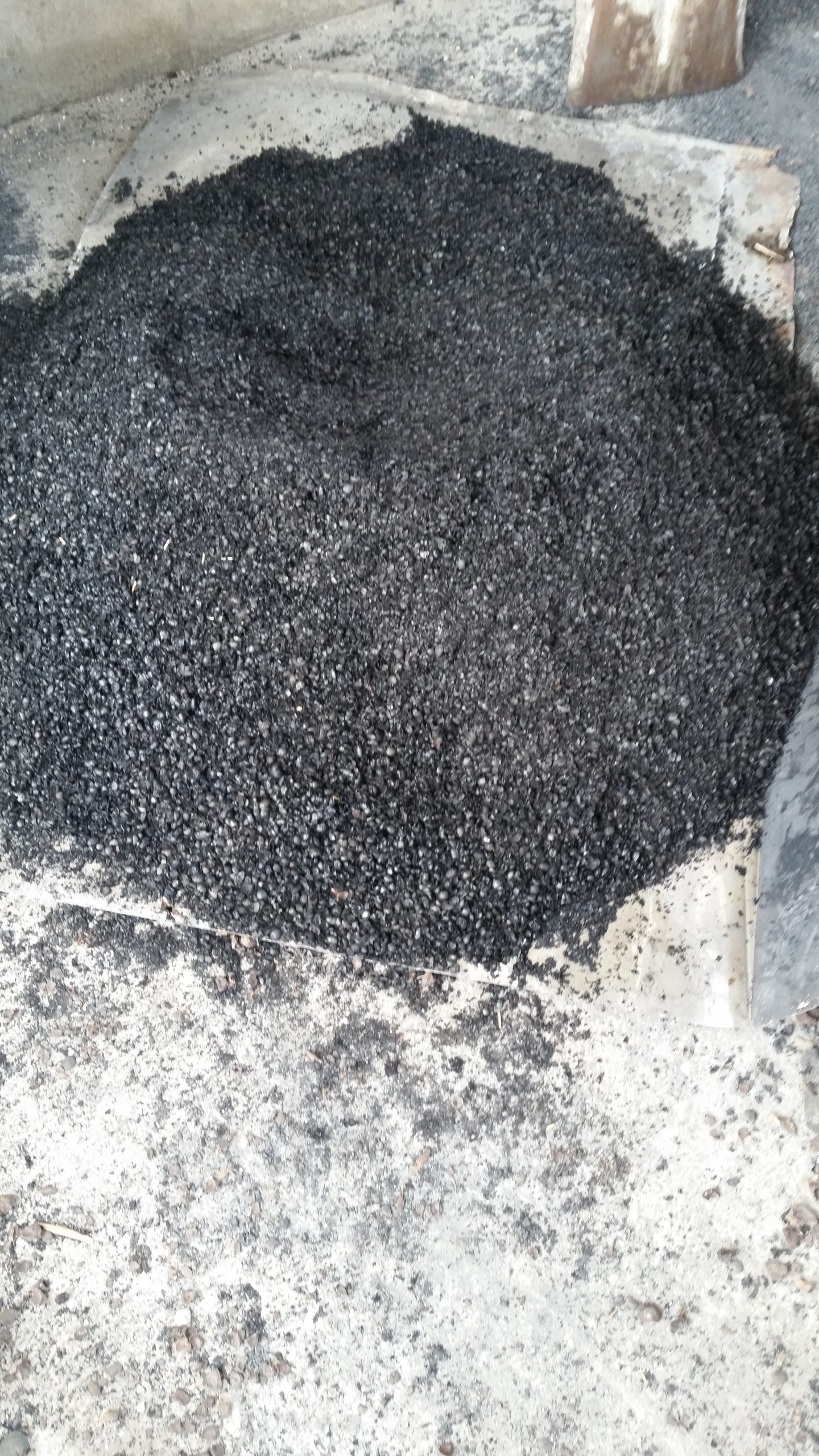
Biochar is a porous, carbonaceous material made by heating biomass above 350 °C with little oxygen. Under the European Biochar Certificate (EBC), it is not made to be burned: it is used so that its carbon stays stored for the long term or replaces fossil carbon in industry. It is used in soil, compost, livestock farming and industry. To tell whether it is good quality, check that the class on its certificate is admissible for your use, and check the batch label and its H/Corg ratio. And if it is for farming in Ecuador, ask whether the product is registered with Agrocalidad.
Contents
What biochar is
According to the European Biochar Certificate (EBC), biochar is a porous, carbonaceous material produced by pyrolysis of biomass. It is applied so that its carbon stays stored for the long term, or replaces fossil carbon in industry. It is not made to be burned to generate energy.
Pyrolysis breaks organic matter down above 350 °C, in a low-oxygen process. The EBC states that the products of torrefaction, hydrothermal carbonisation and coke production cannot be called biochar.
How a pyrolysis plant handles its gas is covered in What does a pyrolysis reactor do with the gas it produces?.
What it is used for
The EBC lists agricultural and industrial uses. In farming: soil conditioner, composting additive, fertiliser carrier, manure treatment, stable bedding, and silage and feed additive. In industry: construction, plastics, composite materials and textiles.
In soil, the effect depends on where it is applied. A 2017 global meta-analysis found that, on average, biochar did not change crop yields in temperate latitudes and raised them by 25% in the tropics. According to the authors, in the tropics the increase came from liming and fertilisation, which is consistent with acidic, low-fertility soils that receive little fertiliser. They conclude that the effect is not universal.
That 25% is an average across studies, not a prediction for your farm. We go through that evidence in Why tropical soils change the biochar equation. Other uses have their own articles: anaerobic digestion, concrete and asphalt and testing building materials.
Six things to check before you buy
1. The certificate class, and whether it matches your use. The EBC has six classes: FeedPlus, AgroOrganic, Agro, Urban, Materials and Basic. The class does not say whether one biochar is better than another: it says which use the biochar is admissible for. Materials and Basic must not be used in agriculture or other soil applications. If it is for animal feed, from 2027 the EBC no longer certifies batches as EBC-Feed.
2. The batch label. Under the EBC, the label or delivery note of unprocessed biochar must state at least the class, organic carbon, H/Corg ratio, pH, dry weight and volume. The rest of the analysis (feedstock, pyrolysis temperature, nutrients, heavy metals and polycyclic aromatic hydrocarbons) is found through the batch QR code. For the soil classes, the EBC requires biochar to be kept moist to prevent dust and spontaneous combustion, and recommends 30% water.
3. The H/Corg ratio. The EBC requires it to be below 0.7 in all its classes. Higher values indicate chars that did not come from pyrolysis, or flaws in the process.
4. Organic carbon, read against the feedstock. The EBC requires it to be declared, and it ranges from under 20% to 95% of dry matter. Straw biochar is usually 40–50%; wood and nutshell biochar, 70–90%. Before comparing percentages, ask which biomass each biochar comes from.
5. Heavy metals and where the biomass came from. During pyrolysis biomass loses more than half its weight, but heavy metals stay, except some volatile ones such as mercury. That is why biochar contains more heavy metals than the biomass it came from. According to the EBC, values above the limits mainly indicate that the biomass was contaminated.
6. "Analysed" is not "certified". If an analysis done to the EBC method by an endorsed laboratory is advertised, the EBC requires stating that the biochar is not certified. Certification also includes an annual on-site inspection, and the sample is taken by an endorsed sampler. The EBC also requires pyrolysis gases to be recovered or burned: they must not escape into the atmosphere.
In Ecuador: Agrocalidad registration
In Ecuador, Agrocalidad's technical manual for fertilisers, soil amendments and related agricultural products applies to anyone who manufactures, formulates, packages, imports, exports, distributes or sells them. To sell them, the registration process must be completed. The manual does not apply to what a farmer makes in Ecuador solely for their own use.
The EBC, for its part, describes itself as a voluntary industry standard in Europe. If you are offered biochar for farming in Ecuador, ask whether the product is registered with Agrocalidad, and under which category.
We cite edition 7 of the manual, approved on 13 June 2022 and published on Agrocalidad's website. We could not confirm whether it is still in force.
Questions for any supplier
These questions apply to any biochar, ours included:
· Which EBC class does the batch have, and is it admissible for the use I have in mind?
· Can you share the certificate and the batch QR code?
· What are the H/Corg ratio and the organic carbon of the batch?
· Which biomass does it come from, and where does that biomass come from?
· Is the price per dry weight or per weight including moisture?
· What happens to the pyrolysis gases at the plant?
· If it is for farming in Ecuador: is the product registered with Agrocalidad, and under which category?
Frequently asked questions
Are biochar and "biocarbón" the same thing?
Yes. On this blog, we use the two words as synonyms.
Is a certified biochar fit for any use?
No. Under the EBC, the class shows which use the biochar is admissible for. EBC-Materials and EBC-Basic, for example, must not be used in agriculture or other soil applications.
How much will it raise my crop yield?
Nobody can promise you a figure. The 2017 meta-analysis found an average increase of 25% in the tropics and no average effect in temperate latitudes. It is an average across studies: to know what happens in your soil, we recommend a trial on your farm with a control plot.
Does biochar need Agrocalidad registration?
Agrocalidad requires registration to sell fertilisers, soil amendments and related agricultural products. If you are offered biochar for farming, ask whether the product has that registration and under which category.
Conclusion
Good-quality biochar cannot be recognised by eye. It is recognised by documents and answers anyone can ask for: an EBC class admissible for your use, the batch label and QR code, the H/Corg ratio and, for farming in Ecuador, an answer on whether the product is registered with Agrocalidad. Ask for them before you buy, from us too.
Sources and methodology
Standards:
European Biochar Certificate (EBC), v10.5E, 14 Aug 2025 — ch. 1, 2 and 3; §6, §7.1, §7.2, §7.5, §7.6, §8.3, §12.1.3, §12.2 and §13.1. PDF (accessed 21 Oct 2026)Agencia de Regulación y Control Fito y Zoosanitario (Agrocalidad), Manual técnico para el registro y control de fertilizantes, enmiendas de suelo y productos afines de uso agrícola, edition 7 (approved 13 Jun 2022); current validity not confirmed — §2.1, §2.2 and §5.1. PDF (accessed 21 Oct 2026)
Studies:
Jeffery, S., Abalos, D., Prodana, M., Bastos, A. C., van Groenigen, J. W., Hungate, B. A. and Verheijen, F. (2017). Biochar boosts tropical but not temperate crop yields. Environmental Research Letters 12(5): 053001. doi:10.1088/1748-9326/aa67bd (accessed 21 Oct 2026)
Nina Energy:
Product page EBC-certified biochar, on nina.energy (accessed 21 Oct 2026).
Methodology: every statement about standards and studies comes from the original text of the source, accessed on 21 October 2026. This article does not report yields, carbon sequestration or laboratory results for Nina Energy's biochar.


