
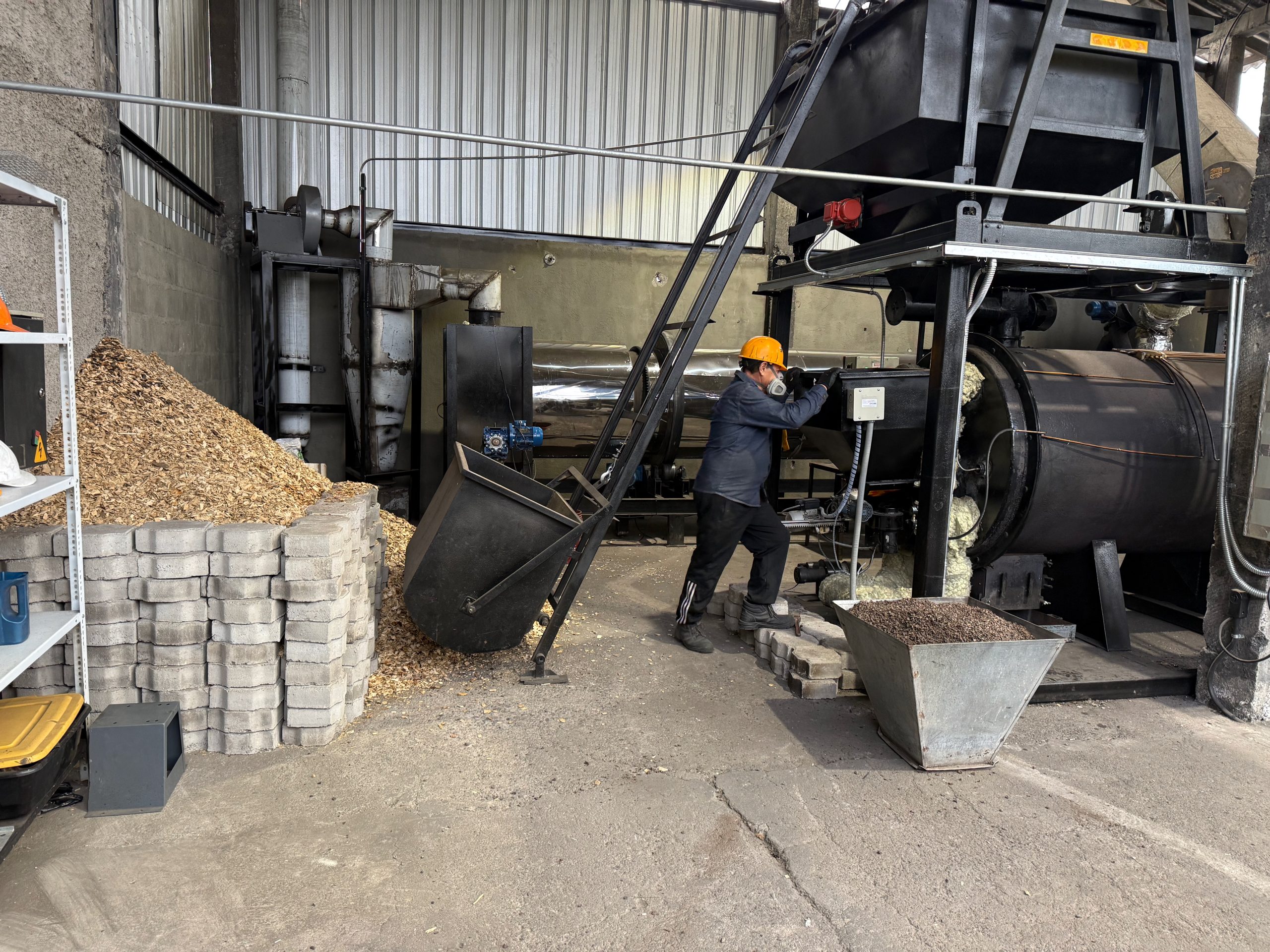
A pyrolysis reactor can arrive imported or be built at the site where it will operate. Before deciding, it pays to answer eight questions: how it is classified at customs, who handles the formalities and bears the risk, where it is built, how long it takes, which parts come from abroad, who does the civil works and installation, what happens with spare parts and maintenance, and how to grow. In Ecuador, Colombia and Peru, customs can rule on the tariff classification of equipment before it is imported, under different conditions in each country.
Contents
The eight questions
1. How is the equipment classified at customs?
All three countries offer a way to learn the tariff classification before importing, under different conditions. In Ecuador, SENAE issues advance rulings on tariff classification at the request of any natural or legal person with justified reasons, including importers, exporters and producers: they are binding on customs and on the applicant, and the procedure is free of charge, although you may pay for services such as a customs agent. In Colombia, DIAN issues them before importation, at the request of the importer, the foreign exporter or producer, or another legitimate party; once final and published in the Diario Oficial they are mandatory, and they remain in force as long as the conditions under which they were issued do not change. In Peru, SUNAT issues advance rulings under each trade agreement, at the request of the importer, exporter or producer; it must issue them within 90 calendar days, unless the agreement sets a shorter period, and they are mandatory.
2. Who handles the formalities, and who bears the risk?
Under the Incoterms 2020 rules, under EXW the seller does not clear the goods for export; the buyer takes on export, import and transit customs, and risk passes to the buyer at the seller's place of delivery. Under DDP, the seller handles both export and import formalities, and risk passes to the buyer when the goods reach the agreed destination; unloading is always the buyer's risk. That is why it pays to compare offers on the same Incoterm.
3. Where is it built?
We build the equipment at the site where it will operate, not in Quito. If the offer is for imported equipment, ask where it is built and how it gets to your plant.
4. How long does it take?
In previous projects, building one module took about 12 weeks in black steel and about 20 in A310 stainless steel. The choice of steel changes the fabrication time. We explain it step by step in how long it takes to install a pyrolysis plant. If the equipment is imported, ask how much transport and customs add to the fabrication time.
5. Which parts come from abroad?
Ask any supplier which materials or components come from abroad and who is responsible for bringing them in.
6. Who does the civil works and installation?
Civil works and utility connections move forward in parallel with fabrication: we can take care of them or, if you prefer, you can do them yourself. In a previous project, with the civil works ready, installation and start-up took about 3 weeks per line, operator training included.
7. What about spare parts and maintenance?
Ask any supplier which spare parts the equipment will need, where they can be sourced and who does the maintenance.
8. How does it grow if your residue increases?
Our equipment is modular: capacity grows by adding modules. If your residue volume may change, ask how the equipment you are offered can be expanded.
Frequently asked questions
Can I find out how a reactor is classified before importing it?
In Ecuador (SENAE) and Colombia (DIAN), the importer, among others, can request an advance ruling on tariff classification; in Peru (SUNAT), the importer, exporter or producer can request an advance ruling under a trade agreement.
What does it mean for an offer to be EXW or DDP?
Under the Incoterms 2020 rules, under EXW the buyer takes on export, import and transit customs. Under DDP, the seller handles both export and import formalities, and risk passes to the buyer when the goods reach the agreed destination.
Does building on site take longer than importing?
Compare complete timelines. In our previous projects, fabricating one module took about 12 weeks in black steel and about 20 in A310 stainless steel. Installation and start-up are separate. If the equipment is imported, ask about fabrication, transport and customs times.
Conclusion
Importing or building on site is not decided on price alone. With the eight answers, you can compare offers that at first sight do not look alike.
Sources and methodology
Customs:
· Servicio Nacional de Aduana del Ecuador (SENAE), procedure SENAE-005-001-001, "Resolución anticipada sobre clasificación arancelaria de mercancías objeto de comercio internacional", information updated 14 Jan 2026. gob.ec (accessed 15 Oct 2026)· Dirección de Impuestos y Aduanas Nacionales (DIAN), "Resoluciones Anticipadas de Arancel"; Decree 1165 of 2019, arts. 298–302; page with no publication date. dian.gov.co (accessed 15 Oct 2026)· SUNAT, specific procedure DESPA-PE.00.09, "Clasificación arancelaria de mercancías", version 5, approved by Resolución 000050-2021/SUNAT, in force since 14 Apr 2021. sunat.gob.pe (accessed 15 Oct 2026)
International trade:
· ICC Academy, "DDP & EXW Incoterms® 2020 explained: Key differences", 16 Apr 2025. Page (accessed 15 Oct 2026)
Methodology: every statement about customs and Incoterms comes from the source's original text, accessed 15 October 2026. Customs rules change: check with customs or your agent before importing. The fabrication times are references from Nina Energy's previous projects, and the installation and start-up time comes from one previous project; none is a contractual commitment. This article gives no tariffs or prices.


