
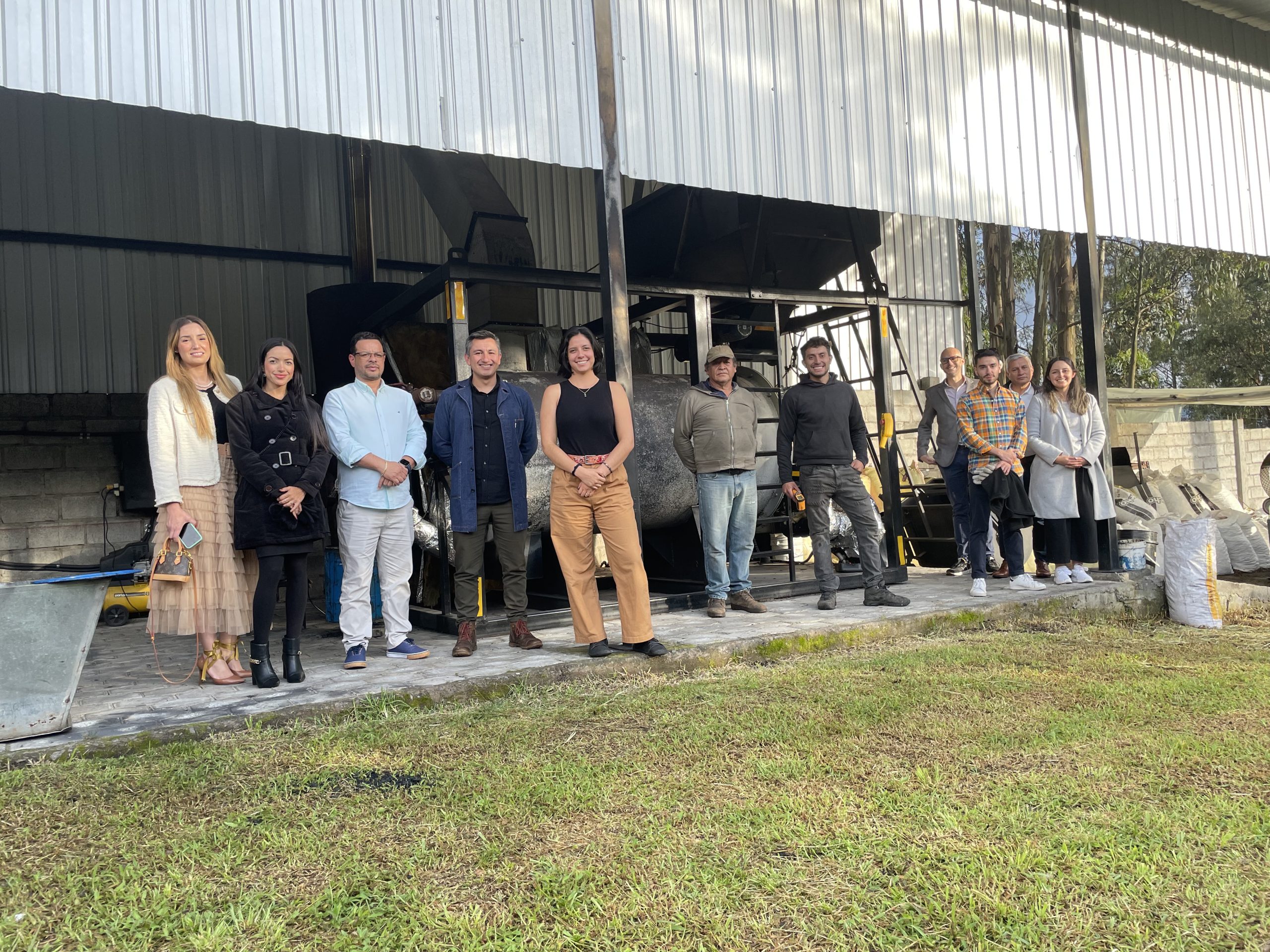
In our previous projects, fabricating one module took about 12 weeks in black steel and about 20 in A310 stainless steel. Civil works and utility connections move forward in parallel. In a previous project, installation and start-up took about 3 weeks per line, operator training included. Added up, that is about 15 weeks for a single-module line in black steel and about 23 in A310, from the start of fabrication, if the civil works are ready in time. These are references from what we have already done, not a contractual deadline.
Contents
The five stages
1. Residue analysis Before sizing equipment you need to know the residue: what it is, how much water and ash it has, what it carries besides biomass and how much you generate. We explain this in 7 questions about your residue. We give no timeline for this stage: it depends on the laboratory and on the data you already have.
2. Sizing and offer With the residue data, we define how many modules you need and in which steel. The equipment is modular: if the volume grows, modules are added. The choice of steel changes the schedule, because it changes the fabrication time.
3. Fabrication, civil works and utility connections We fabricate the equipment at the site where it will operate, not in Quito. In previous projects, one module took about 12 weeks in black steel and about 20 in A310 stainless steel. In parallel, the civil works and utility connections move forward: we can take care of them or, if you prefer, you can do them yourself.
4. Installation, start-up and training In a previous project, with the civil works and utility connections ready, installation and start-up took about 3 weeks per line. During that time we train the operators. The reactor starts up on wood pellets or other biomass, without LPG.
5. Biochar certification, if you want it Certification has its own steps. Under the European Biochar Certificate (EBC), each pyrolysis unit is certified separately. A technical pre-audit by Carbon Standards International and an annual inspection visit are mandatory, and when the first batch is registered, an endorsed sampler takes a representative sample within the first two months.
Questions for any supplier
These questions apply to any offer, ours included:
When does the fabrication time start: at signature, at the down payment or when the material arrives?
Where is the equipment fabricated, and who installs it?
Who does the civil works and utility connections, and in parallel with what?
Is training for your operators part of start-up, or separate?
What fuel does the reactor start up on?
If you want carbon credits: does the supplier have a project registered under the methodology you are interested in? We do not yet have one registered with Isometric.
Frequently asked questions
How long does it take in total to install a pyrolysis plant?
Adding both references together, about 15 weeks for a single-module line in black steel and about 23 in A310 stainless steel, from the start of fabrication to start-up, if the civil works are ready in time. On top of that comes the earlier stage of analysis, sizing and offer, which depends on the laboratory and on the data you already have.
Can I start with one module and grow later?
Yes. The equipment is modular: capacity grows by adding modules.
What steps does biochar certification involve?
Under the EBC, each pyrolysis unit is certified separately, with a technical pre-audit, an annual inspection visit and sampling of the first batch within the first two months after it is registered.
Conclusion
The timeline of a pyrolysis plant is not a single figure: it is the sum of stages that depend on the residue, the steel and who does what. If a supplier can tell you how long each stage it controls takes and what runs in parallel, you know what to expect.
Sources and methodology
· European Biochar Certificate (EBC), v10.5E, 14 Aug 2025: §5.8, §8.6 and §13.2. PDF (accessed 13 Oct 2026)
Methodology: the statements about the EBC come from the standard's original text, accessed 13 October 2026. The fabrication times are references from Nina Energy's previous projects, and the installation and start-up time comes from one previous project; none is a contractual commitment. This article reports no yields or results for Nina Energy's biochar.


