
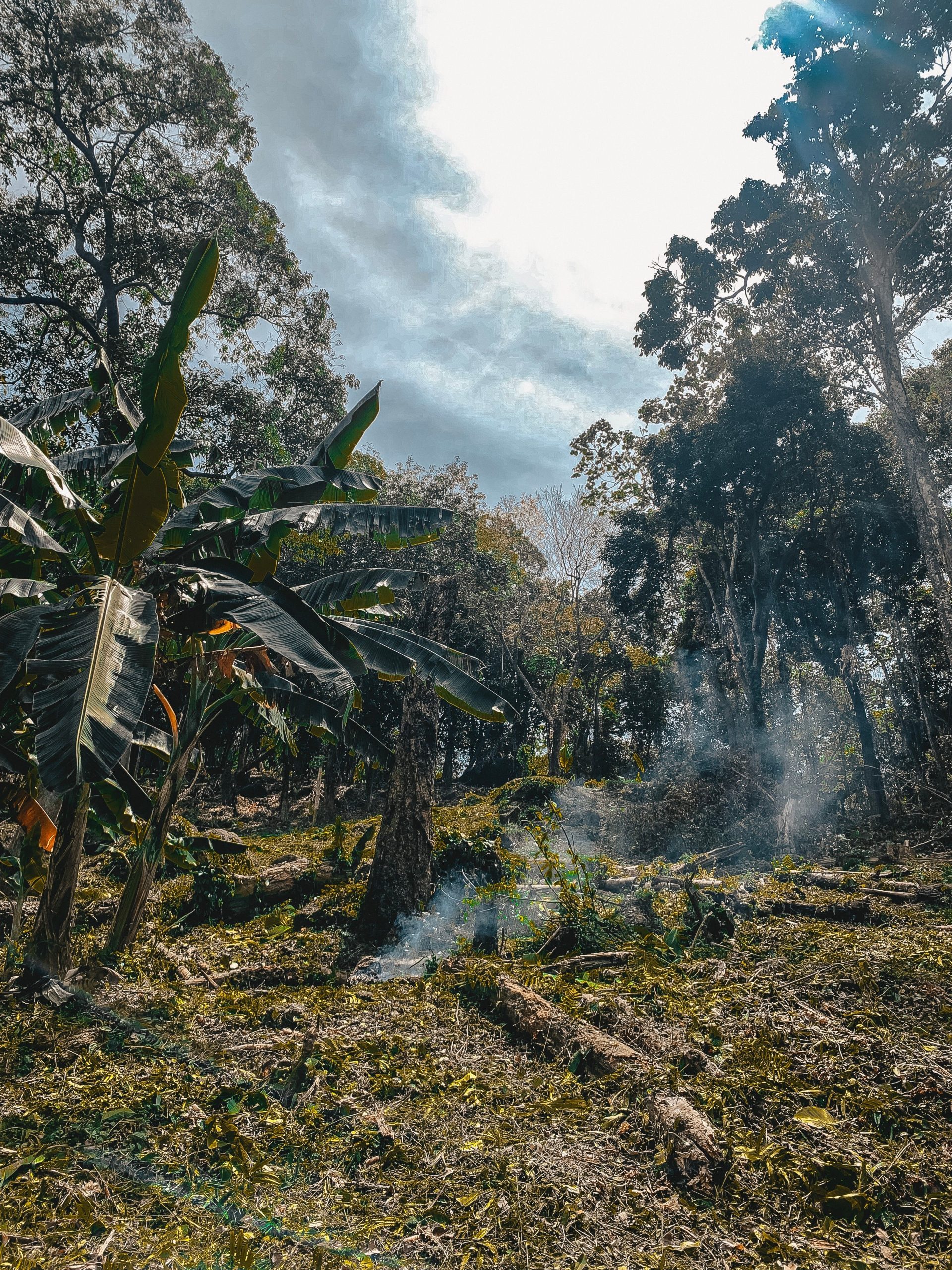
Because the same material behaves differently depending on the soil it lands in. A global meta-analysis of 109 studies found biochar raised crop yields by an average of 25% in the tropics and had, on average, no effect in temperate latitudes. The mechanism is soil chemistry correction, which means the effect is largest where soils are most acidic and least fertile.
Index
What the evidence says
The most-cited result in this area is Jeffery and colleagues, published in Environmental Research Letters in 2017. Pooling 1,125 observations from 109 independent studies, the authors found, in their words, that "biochar has, on average, no effect on crop yield in temperate latitudes, yet elicits a 25% average increase in yield in the tropics." That is a single number standing on a wide and heterogeneous body of trials, and it is an average across crops, soils and biochars rather than a prediction for any one field. What makes it useful is not its size but its direction: the gap between the two latitudes is the finding, not the 25%.
Why the tropics respond and temperate soils do not
The paper attributes the tropical response principally to liming and to nutrient supply. Tropical and subtropical soils tend to be more acidic, more weathered and more heavily leached than temperate soils. Biochar is alkaline and porous, so applying it corrects several of those constraints at once. In temperate soils, where pH and base saturation are already closer to what crops need, there is little left for biochar to correct, and the average effect collapses to nothing.
The same paper reports that biochar with high nutrient content produced more than three times the yield increase of structurally similar but nutrient-poor biochar. That detail matters commercially: it means feedstock and production conditions change the agronomic result, and that two materials both correctly labelled biochar are not agronomically interchangeable.
What biochar does not do
A second meta-analysis, Ye and colleagues (2020), separated biochar's effect from the fertiliser applied alongside it, and the result deserves to be quoted rather than summarised: "The use of biochar alone did not increase crop yield regardless of the control considered."
What did work was the combination. Against an unfertilised control, inorganic fertiliser alone raised yield by 26% (CI 15–40%), while biochar plus inorganic fertiliser raised it by 48% (CI 30–70%). Measured against fertiliser alone, adding biochar contributed a further 15% (CI 11–19%). A separate analysis of trials reporting yields over three years or more after a single application found a 31% increase (CI 17–49%), which the authors attribute to properties other than liming.
Two boundaries come with those figures. The analysis covers applications of 20 t/ha or less and short-term, one-year field responses. And the authors report that rates above 10 t/ha did not contribute to greater yield, at least in the short term — so more biochar is not straightforwardly better.
Frequently asked questions
Does this mean biochar will raise my yield by 25%?
No, and any supplier quoting that number at you for your farm is misusing it. It is an average across 109 studies spanning many crops, soils and biochars, with wide variation inside it. The honest use of the figure is to establish that the tropical response is real and worth testing. The only thing that establishes what happens on a particular field is a trial on that field, with a control.
Can biochar replace fertiliser?
On this evidence, no. Ye and colleagues found no yield increase from biochar applied on its own, against either control. The gain appeared when biochar was added alongside inorganic fertiliser. The realistic framing is that biochar improves what fertiliser achieves in a soil whose chemistry was limiting the response, not that it substitutes for the nutrients themselves.
Is more biochar better?
Not according to the same analysis, which found that application rates above 10 t/ha did not deliver greater yield in the short term, within a dataset capped at 20 t/ha. Over-application therefore costs money without a demonstrated short-term return. Longer-horizon effects may differ — the multi-year result suggests something persists — but that is a different question from whether a heavier single dose pays.
Conclusion
The geography argument for biochar in the Andes and the tropics is sound, and it rests on published, independently conducted work rather than on anybody's product data. What the evidence does not provide is a number anyone can promise a grower. It shows a direction, a mechanism and a set of boundary conditions: works with fertiliser, not instead of it; strongest where soils are acidic and weathered; no demonstrated short-term gain above 10 t/ha. Anyone offering a yield figure for your specific crop should be asked for the trial it came from.
Sources and methodology
Jeffery, S., Abalos, D., Prodana, M., Bastos, A. C., van Groenigen, J. W., Hungate, B. A., Verheijen, F. (2017). "Biochar boosts tropical but not temperate crop yields." Environmental Research Letters 12(5): 053001. DOI 10.1088/1748-9326/aa67bd. Published 25 Apr 2017. (consulted 28 Sep 2026)Ye, L., Camps-Arbestain, M., Shen, Q., Lehmann, J., Singh, B., Sabir, M. (2020). "Biochar effects on crop yields with and without fertilizer: A meta-analysis of field studies using separate controls." Soil Use and Management 36(1): 2–18. DOI 10.1111/sum.12546. Published online 10 Dec 2019. (consulted 28 Sep 2026)
Methodology: both abstracts were read in full from the published papers and the quoted sentences reproduced verbatim. No figure from either paper has been applied to any specific crop, soil or product.


